This article is written by Navya Tiwari, a law student at ICFAI University, Dehradun, with a keen interest in Corporate Governance and Alternative Dispute Resolution (ADR).
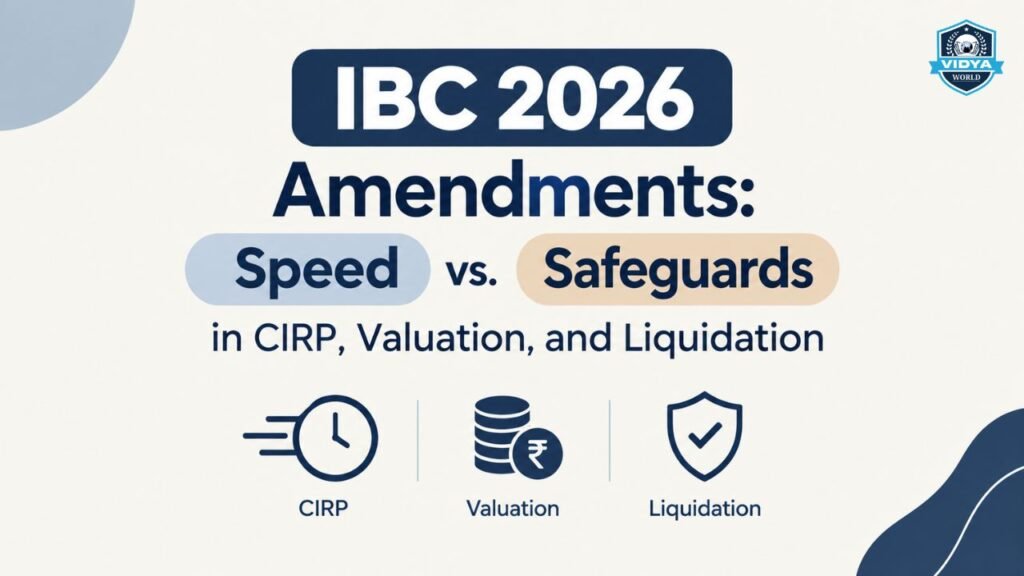
Every student of insolvency law reaches a point, after enough judgements on delayed admissions and stalled resolution plans, where a particular frustration sets in. The Insolvency and Bankruptcy Code, 2016, was supposed to give India a resolution process that actually moved fixed timelines, predictable outcomes, and no endless fluctuations. What it gave us instead, for most of the last decade, was years of litigation dressed up as procedure, extensions treated as routine, and deadlines nobody really expected anyone to keep. This 2026 amendment to the Insolvency and Bankruptcy Code, officially 6 of 2026, which received presidential assent and was published by the Insolvency and Bankruptcy Board of India (“IBBI”) as a Gazette notification on 7 April 2026, is Parliament’s most serious attempt so far to actually close that gap. I have followed the Insolvency and Bankruptcy Code (Amendment) Bill, 2025, through its parliamentary stages, and I am now working through the IBBI discussion papers that followed it into force. What strikes me most is the tension sitting underneath the whole exercise: Parliament is in a visible hurry to make the code faster, while the regulator, more quietly, is trying to make sure that speed does not come at the cost of getting things right.
The Problem the 2026 Act Was Built to Solve
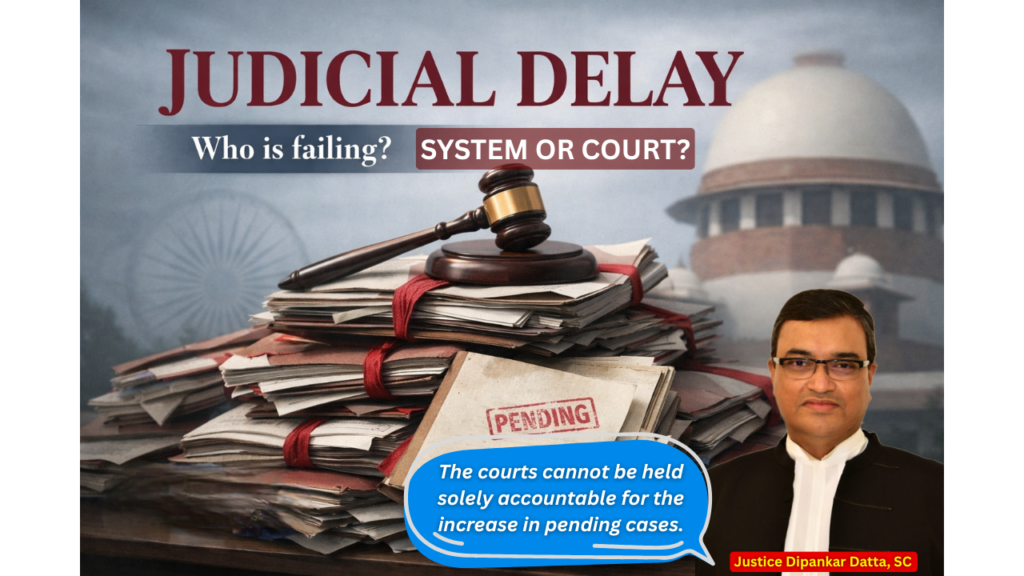
By the time the bill was introduced, the cracks in the CIRP framework were no longer something anyone could seriously argue about. In a meaningful share of cases, the time from filing to admission before the National Company Law Tribunal stretched past 450 days against a fourteen-day statutory target that had, in practice, become little more than an aspiration and focused on actual results. Creditors, unlike their counterparts in other jurisdictions with pre-pack mechanisms, had no real out-of-court route into resolution. Group insolvencies on the scale of IL&FS or Videocon exposed a legal architecture with no real answer for corporate groups collapsing together. And promoters, over time, had learned to structure asset transfers in ways that tested the limits of the avoidance-transaction provisions. None of this was an academic complaint. It was the reason haircuts kept widening and the reason recovery, when it came at all, came too late to matter.
Speed: Mandatory Admission, CIIRP, and the New Clocks
The 2026 Act attacks delay on several fronts at once. The most doctrinally prominent change is a single word: “may” becomes “shall” in the admission provision. This recollects, by rule and statute, the position the Supreme Court had already taken in Innovative Industries: once default is proved, the Adjudicating Authority has no actual discretion left to withhold admission. Second, the Act hands creditors something genuinely new: the Creditor-Initiated Insolvency Resolution Process, or CIIRP, which lets financial creditors move into resolution without waiting on a contested NCLT filing. It is worth noting, though, that CIIRP will not be fully operational until the government notifies the eligible classes of corporate debtors and initiating creditors and until the supporting IBBI regulations are finalised. Thirdly, the Act puts hard clocks on the back end of the process. If a CIRP runs its course and no resolution plan comes out the other end, the NCLT now has thirty days to order liquidation: it can’t just sit on the file. Voluntary liquidations have been given a hard stop too: one-year, full stop. Fourthly, resolution plan approvals are timed to the NCLT which is expected to approve a plan within thirty days of submission, or duly mention its reasons for taking longer than actually expected.
On record, this is eventually what a decade of NCLT congestion called for. My hesitation, having watched Tribunal benches work under their existing caseloads, is that a statutory clock is only as credible as the institutional capacity sitting behind it.
Safeguards: Valuation Discipline and Guardrails Against Value Erosion
The safeguard side of this reform gets far less attention in the headlines, but it may matter more for what creditors actually recover. The IBBI’s CIRP (Amendment) Regulations, notified on 25 February 2026, revised the definition of fair value to explicitly capture the “underlying synergies” between a corporate debtor’s tangible and intangible assets, a direct correction to the older practice of valuing assets piecemeal, which routinely understated what a going concern was actually worth. Starting from April 2026, the IBBI went forward, taking the charge and mandating that all IBC valuations comply with International Valuation Standards, introducing a specialised “coordinating valuer” responsible for the Aggregate Fair Value across asset classes, and requiring valuers to document their basis of value, methodology, and assumptions rather than hand over a number only. Anyone who has sat with a resolution professional’s valuation annexure and wondered how two registered valuers reached wildly different figures for the same plant will recognise why this matters. It is not a mere fix; it changes the liquidation floor against which every resolution plan and every dissenting creditor’s entitlement is ultimately measured and eventually recorded.
The Act also re-reads and reassures how dissenting financial creditors and secured creditors are treated in liquidation. Section 30(2)(b) now adopts a “lower-of” formula for what dissenting creditors receive, and secured creditors who relinquish security worth less than the debt owed retain secured status only up to that lower value, ranking as unsecured creditors for the remainder. A new Section 28-A allows a guarantor’s assets to be pulled into the corporate debtor’s CIRP once a secured creditor has already enforced its security but only with the Committee of Creditors’ approval, and, where the guarantor is itself under insolvency proceedings, a further 66% CoC vote on the guarantor’s side. Section 12A withdrawal has, if anything, been made stricter rather than easier: a withdrawal application now needs 90% CoC approval can only be filed after the CoC is constituted but before the first invitation for resolution plans goes out, closing the window promoters had previously used to treat CIRP as leverage in a negotiation.
Where Speed and Safeguards Pull Against Each Other
The honest difficulty is that these two halves of the Act are pulling in opposite directions. Mandatory admission and hard liquidation deadlines are built to compress the process. Its mid-2026 Discussion Paper, open for public comment until 22 July 2026, proposes clarification stating that a resolution professional must keep performing their duties until a Section 12A withdrawal application is actually decided and suggests removing the need that liquidators seek adjudicating authority approval merely to update a stakeholder list. Both proposals read as attempts to strip out procedural friction without touching the underlying safeguards, a sensible instinct, but one that also confirms the 2026 Act, as passed, left real gaps for subordinate regulation to fill in.
For a student trying to form a considered view rather than pick a side, the direction of travel looks sound. A regime that mandates admission the moment default is proved, puts a clock on liquidation, and simultaneously raises the documentation bar for valuation is not trading safety for speed: it is trying, reasonably, to buy both at once: certainty from the statute and rigour from the regulator. Whether that actually works will depend far less on the text of Act No. 6 of 2026 than on NCLT bench strength, on how faithfully IBBI follows through on the regulations still pending, and on whether India’s registered valuers can deliver IVS-standard reports within the seven-day window that Regulation 27 still demands. The law has done its part. The infrastructure now has to catch up.