INTRODUCTION :
In a normal democracy, a person is punished only after committing a crime and after the court proves them guilty. This idea is considered one of the most basic principles of justice. But preventive detention works differently. Under preventive detention laws, a person can be detained even before committing any actual offence, only on suspicion that they may create problems in future.
India is one of the few democratic countries where preventive detention is directly allowed by the Constitution itself. Article 22 gives power to the State to make preventive detention laws in certain situations. These provisions were added because India had just faced partition violence, communal tensions, and security threats after independence.
At that time, preventive detention was expected to remain an exceptional power which would only be used during emergencies or serious threats to public order. However, over time, concerns have increased that such laws are now being used much more frequently than originally intended.
Today, preventive detention is often discussed not only in matters of terrorism or national security, but also in cases involving protests, political tensions, activists, and public dissent. This creates an important constitutional question: Is preventive detention still an exception in Indian democracy, or is it slowly becoming a regular method of governance?
WHAT IS PREVENTIVE DETENTION ?
Preventive detention means keeping a person in custody before any actual crime takes place. The purpose is prevention, not punishment. This is what makes it different from ordinary criminal law. In normal criminal cases, police must show evidence that a crime has already been committed. The accused gets a fair trial, legal representation, and punishment only after guilt is proven in court. But in preventive detention, a person may be detained merely because authorities believe they could disturb public order or national security in future.
The Constitution deals with preventive detention under Article 22(3) to Article 22(7). These provisions allow Parliament and state legislatures to make laws regarding such detention. Some safeguards are also mentioned, such as review by advisory boards and informing the detainee about the grounds of detention.
Even Dr. B.R. Ambedkar was uncomfortable with preventive detention. He described it as a “necessary evil.” This clearly shows that the makers of the Constitution never viewed it as something ideal for democracy. It was accepted mainly because the country was facing extraordinary conditions after independence. The important point is that preventive detention was expected to remain temporary and exceptional, not something used frequently in ordinary situations.
GROWTH OF PREVENTIVE DETENTION LAWS IN INDIA :
Over time, India has created several preventive detention laws. Some major examples include the National Security Act (NSA), 1980, the Public Safety Act (PSA) in Jammu and Kashmir, and COFEPOSA related to smuggling and foreign exchange violations. Among these laws, the NSA is one of the most discussed. It allows authorities to detain a person for up to 12 months without formal charges if they believe the person may threaten national security or public order.
The increasing use of preventive detention has raised serious debate in recent years. According to reports based on National Crime Records Bureau data, more than 1.1 lakh preventive detentions were recorded in India during 2021 alone. Reports also showed that preventive detentions increased by around 23.7% compared to the previous year.
Another important concern is that many detainees are later released because detention orders fail legal review. Government data presented in Parliament showed that under the NSA, around 1,198 people were detained during 2017 and 2018 together, but nearly 635 of them were later released by review boards. This raises questions regarding whether preventive detention powers are sometimes used too broadly.
Reports also showed that Tamil Nadu, Telangana, Gujarat, and Jammu & Kashmir recorded particularly high numbers of preventive detention cases in recent years. These figures show that preventive detention is no longer being used only in extremely rare situations. Its use has become much more common than originally expected.
PREVENTIVE DETENTION AND FUNDAMENTAL RIGHTS :
Preventive detention creates a direct conflict between two important constitutional ideas: security of the State and liberty of citizens. Article 21 of the Constitution guarantees protection of life and personal liberty. In a democracy, liberty is considered extremely important because people should not lose freedom without proper legal justification. Preventive detention becomes controversial because it restricts liberty even before guilt is proven.
In A.K. Gopalan v. State of Madras, the Supreme Court initially took a narrow approach and strongly upheld preventive detention laws. At that time, the Court mainly focused on whether legal procedure existed. However, the approach later changed in Maneka Gandhi v. Union of India. The Supreme Court expanded the meaning of Article 21 and said that any law affecting liberty must follow a procedure that is fair, just, and reasonable. This judgment became important because it strengthened protection against arbitrary state action.
The real problem is balance. Every country needs security and public order. India also faces challenges related to terrorism, communal violence, organised crime, and border tensions. In such situations, authorities may require preventive powers. But at the same time, democracy cannot function properly if suspicion alone becomes enough to take away liberty. Excessive state control can slowly weaken constitutional freedoms and create fear among citizens.
Security is important, but liberty is equally important in a constitutional democracy.
RECENT CONTROVERSIES AND THE SONAM WANGCHUK INCIDENT:
In recent years, preventive detention has become part of many public controversies. Critics argue that such laws are increasingly being used against protests and dissent instead of only serious security threats.
One important recent example involved Sonam Wangchuk. In September 2025, Wangchuk was detained under the National Security Act during protests related to constitutional safeguards and demands connected with Ladakh. He reportedly remained under preventive detention for nearly six months before being released in March 2026. This incident restarted debate regarding the use of preventive detention in democratic protests. Supporters of the government argued that such action was necessary to maintain public order and prevent disturbances. However, critics questioned whether peaceful protesters should be treated as potential threats before any violence actually occurs.
Similar concerns have also appeared in cases involving students, journalists, activists, and protest movements in different parts of the country. In some situations, detainees are later released because evidence turns out to be weak or insufficient. This does not mean every preventive detention is wrong. In genuinely dangerous situations, authorities may require immediate action to prevent violence or serious threats. But repeated use in protest-related situations raises concerns regarding misuse and overreach of state power.
IS THE EXCEPTION BECOMING THE RULE ?
The biggest concern today is not simply the existence of preventive detention laws, but their increasing frequency and normalisation. Preventive detention was originally introduced as an exceptional measure for extraordinary situations. But when such powers begin getting used regularly, people naturally start questioning whether the exception is slowly becoming the rule.
One major issue is weak safeguards. In many cases, detainees face difficulty challenging detention orders quickly. Judicial review often takes time, and by the time courts intervene, the detention period may already have caused damage to the person’s liberty, reputation, education, or career.
Another issue is repeated detention. Sometimes, even after release, fresh detention orders are again passed on similar grounds. Critics argue that this weakens judicial protection in practice.
There is also concern regarding selective use of these laws. Many people believe preventive detention powers are sometimes applied more strongly in politically sensitive situations. This creates fear regarding unequal application of law.
Concerns become more serious when official data is examined. NCRB related reports showed that more than 1.1 lakh preventive detentions were recorded in 2021 alone, which was the highest rise seen in recent years.
At the same time, completely removing preventive detention may also not be practical. India still faces genuine threats related to terrorism, violent movements, organised crime, and national security. Therefore, the real issue is not the existence of preventive detention itself, but excessive and careless use of it. Such powers should remain limited, carefully supervised, and used only where absolutely necessary.
CONCLUSION:
Preventive detention was introduced in India as an emergency-type power to protect society during extraordinary situations. The Constitution accepted it, but only as an exceptional measure.
However, increasing use of preventive detention in recent years has raised serious constitutional concerns. Cases involving protests, activists, and public dissent have made many people question whether these laws are slowly moving beyond their original purpose. A democracy survives not only through security and control, but also through protection of liberty and dissent. The State certainly has responsibility to maintain public order, but that power must be exercised carefully and responsibly.
Preventive detention may remain necessary in some situations, but if used too frequently or without proper safeguards, the exception can slowly become the rule. And when liberty starts weakening in the name of prevention, democracy itself may slowly begin to suffer.

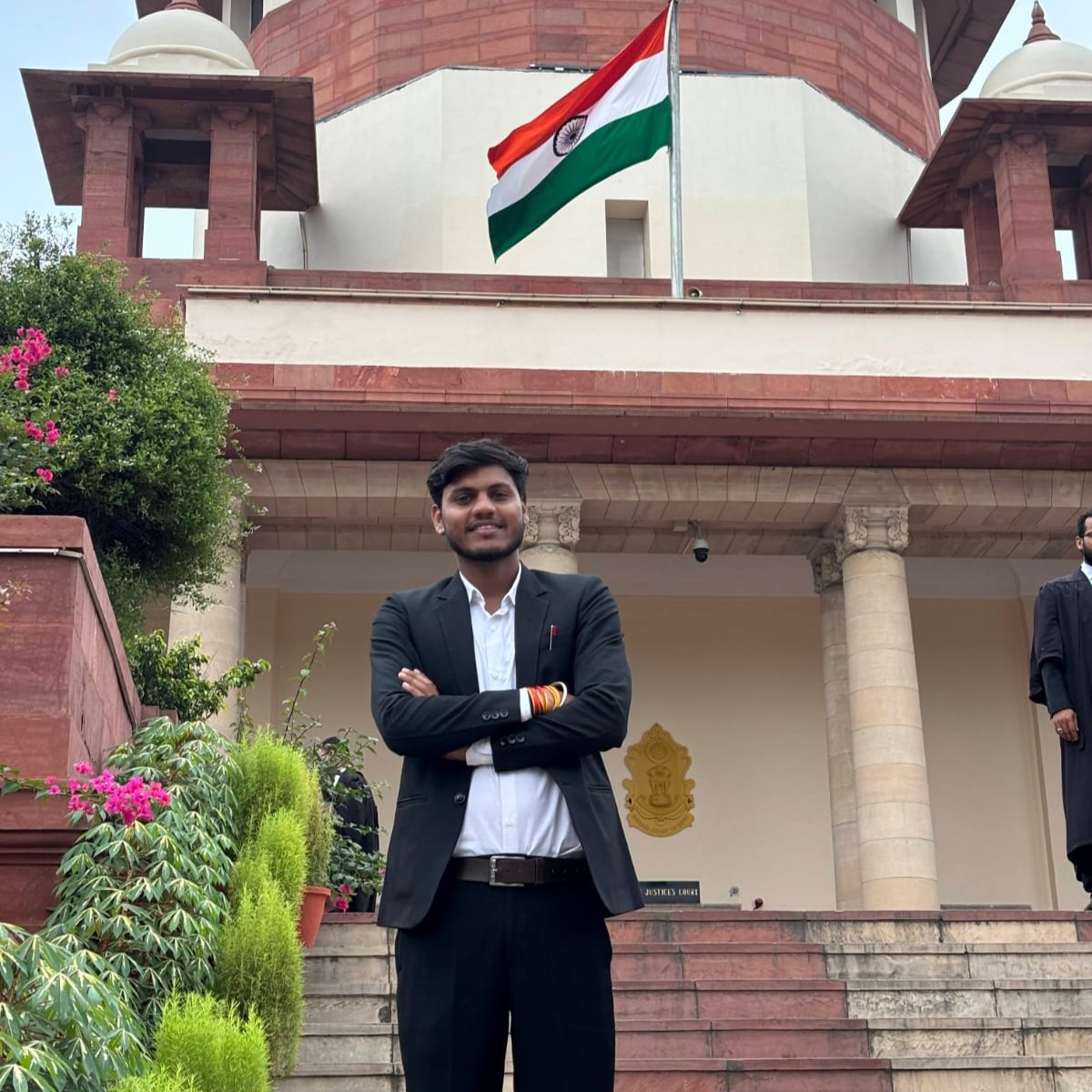
Parth Sahu is a first-year BA.LLB student at NALSAR University of Law, Hyderabad. He is an enthusiastic law student with a strong focus on legal research, article writing, and along with mentoring CLAT and AILET aspirants. He chose the field of law out of a genuine interest in the subject and its application. He aims to grow in this field by continuously improving his skills and contributing meaningfully through his work.