This article is written by Navya Tiwari, a law student at ICFAI University, Dehradun, with a keen interest in Corporate Governance and Alternative Dispute Resolution (ADR).
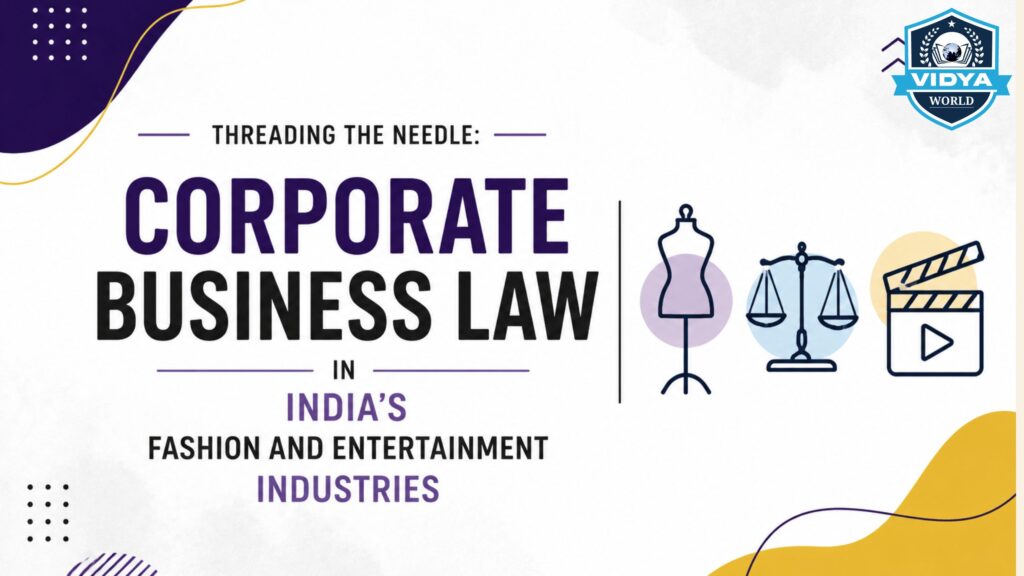
The fashion and entertainment industries in India are changing in a way. The fashion and entertainment industries in India are also seeing the growth of online streaming services and the expansion of big luxury brands. These industries are not about making art and expressing ourselves. The fashion and entertainment industries in India are now businesses with a lot of rules to follow. To succeed in these industries, one needs to understand how the rules of business work. This includes things like governance and intellectual property and contracts.
The Corporate Framework: Structuring for Growth and Control
The entertainment and fashion industries are really successful because they have a system of laws that control how companies work. This system says how businesses should be set up how they can get money and how they can make deals that change everything.
Mergers, Acquisitions, and Market Dominance
The recent wave of consolidation in the media sector especially the Reliance Disney merger brings into light the importance of corporate law in these industries. This deal created India’s largest media entity JioStar and involved navigating a complex maze of regulatory approvals from the National Company Law Tribunal (NCLT) and the Securities and Exchange Board of India (SEBI). Listed companies such as Reliance are mandated to comply with SEBI’s Listing Obligations and Disclosure Requirements (LODR) that requires detailed disclosures on financial details, timelines and post-merger governance structures.
Significantly, such big-ticket deals are also under the scanner of the Competition Commission of India (CCI) under the Competition Act, 2002. The conditional clearance by the CCI for the Reliance-Disney deal was based on potential anti-competitive effects, especially the merged entity’s dominant share of television viewership and advertising revenue, and its control over major cricket broadcasting rights.
New Financing and Deal Structures
Beyond mergers and acquisitions new ways of making deals are changing how content is paid for and how talent is rewarded. The rise of digital has made it more common for streaming services to directly commission content giving creators a guaranteed payment upfront and reducing the risk of movie financing. Also, the way talent deals are structured legally has become more complex. While getting a share of the profit after costs is still common some top talent in big-budget projects is getting a share of the profit before costs. These deals now cover not movie earnings but also include specific shares from digital, satellite and music rights. This change shows how important streaming and non-movie distribution have become.
The Intellectual Property Imperative: Protecting the Brand
In the world of fashion and entertainment the things that are really valuable are often things you cannot touch. Intellectual property law helps protect these things. It makes sure that people who create things and brands can make money from their work. For example, intellectual property law is very important for people who create things. It helps them keep control of their brands and property. This law is also important, for brands because it helps them protect their work.
Fashion: A Multi-Layered IP Strategy
For fashion brands protection is a challenge. It needs a plan that uses different laws. The laws start with the Indian Contract Act, 1872. This law helps with agreements in the supply chain. The Trade Marks Act, 1999 is also important. It protects brand names, logos and packaging or store layouts.
This means that courts in India will protect traditional marks, including colour marks. Fashion designs are protected in two ways. The Copyright Act, 1957 and the Designs Act, 2000 work together. Copyright protects artistic works like sketches and drawings automatically. Section 15 of the Copyright Act says that if a design is copied more than 50 times it is no longer protected by copyright. Then it is protected by the Designs Act. A problem for fashion brands, fast fashion is that the Designs Act needs formal registration. This process is often too slow for collections. The Designs Act also does not protect designs. This creates a gap, in protection. Brands must manage this gap by filing overlapping IP applications and using contracts to protect themselves. The Copyright Act and Designs Act are crucial for fashion brands to understand and use. Fashion brands must be proactive to protect their designs and brand identity.
Entertainment: Securing Content Rights
In the entertainment business intellectual property is really important. When it comes to making movies, television. Online content, the people making the contracts need to be very careful about who owns the intellectual property and who can use it. One person who knows a lot about this said that when someone creates something and gives it to a production company the production company usually owns it from on. This is true for movies, reality shows and news stories. So it is very important to make sure the contracts for using someone’s work making content and hiring talent are clear and say everything they need to say. This helps prevent arguments and makes sure everyone gets paid correctly. Intellectual property is a deal and these contracts need to be done right to avoid problems, with intellectual property.
Contractual Landscapes: From Runway to Retail and Sets to Screens
The daily work of fashion and entertainment companies is controlled by a lot of business agreements. Fashion and entertainment businesses have to deal with contracts every day. These contracts are a part of how fashion and entertainment companies work.
The Fashion Supply Chain
The fashion supply chain needs contracts to manage how goods are made produced and delivered. These contracts usually have:
- Exclusive Distribution Agreements: This gives one distributor the right to sell in a specific area helping to control the market and keep the brand focused.
- Franchise Agreements: Many global brands use these in India. They let someone use the brand name and business model for a fee. They have to follow strict rules on how to run the business and use the brand.
- Key Contractual Terms: These include things like where the product can be sold sales targets, how much things cost and how payments are made. They also cover stuff, like protecting ideas getting products delivered ending the agreement and solving problems.
Cross-Border and Regulatory Compliance
For brands dealing with international agreements is a major legal headache. This means handling laws, rules and business customs. Agreements on who owns ideas, licensing and financial responsibilities need to be discussed. It’s also important to choose which laws apply and how to settle disputes. India has agreements with countries to make it easier to work together on projects. For example, the agreement with the UK helps with compliance in international projects. When it comes to importing and exporting fashion products there are rules to follow. These include paying customs duties, which range from 10% to 30%. There are also a Goods and Services Tax (GST) of 5% to 28%.
The Legal Thread of Sustainability
Sustainability is not a marketing thing anymore it’s a must by law. Fashion brands have to follow rules about the environment and society. There are laws like The Environment (Protection) Act, 1986 the Water (Prevention and Control of Pollution) Act and the Air (Prevention and Control of Pollution) Act. These laws change how fashion factories work those that dye and tan. Factories that dye and tanning must follow these laws. Labour laws for example the Factories Act and the Minimum Wages Act help make sure supply chains are fair.
The Companies Act 2013 says that big companies must spend money on responsibility. This makes brands go for practices. If brands lie about being “green” they can get in trouble under the Consumer Protection Act, 2019 and Advertising Standards Council of India (ASCI) rules.
Digital Risk Management
The fashion brands are facing problems because of e-commerce and influencer marketing. These problems include people using their brand names wrongly and using their logos on media without permission. The fashion brands need to keep an eye on the internet and use things like Indias IT Rules and ASCI guidelines to stop people from doing these things and to report when someone is trying to fool people. One lawyer said something true “If your fashion brand is very popular then you are also at risk. Being famous on the internet means you need to have legal protection, in the real world”.
Conclusion: A Field in Constant Motion
Corporate business law in Indias fashion and entertainment industries is a field to succeed you need to be creative and understand the law. This means knowing about Mergers and Acquisitions regulations protecting property making solid commercial contracts and following new rules on sustainability and digital governance. As fashion and entertainment in India keep changing lawyers who understand business and creative processes will help these sectors grow in a sustainable fair and profitable way. They will make sure Indias fashion and entertainment industries grow and do so with a focus on sustainability, fairness and profitability which’s crucial, for their long-term success.