The world of Intellectual Property Rights that ideas turn into assets and creativity finds its protection.
Table of Contents
ToggleIntroduction
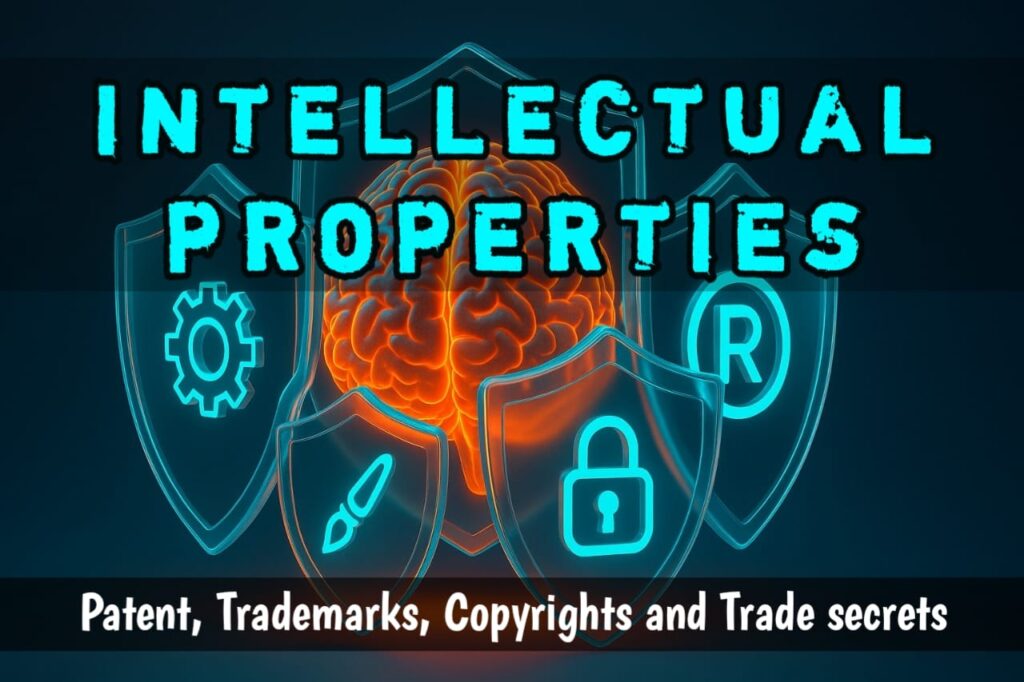
Intellectual property serves as the legal mechanism to protect ‘the creation of the mind’ unlike tangible assets such as land or equipment, IPP is intangible yet it often represents the most valuable competitive advantage a business processes it is divided into various pillars and each design to safeguard a distinct type of intellectual asset and reward the innovators for their effort.
The fundamental purpose of IP law switch is to strike a crucial balance creators and their inventions with exclusive right for limited period. The Universal Declaration of Human Rights also refers to intellectual property rights under Article 27 which states that “Everyone has the right to the protection of the moral and material interest resulting from any scientific literacy or artistic production of which he is the author”.
Types and Acts
Intellectual property rights are divided into various types
- Patent: – An exclusive right granted for an invention, which is a produced or process that provides a new way of doing something, or offers a new technical solution to a problem.
Duration is 20 years from the date of filing subject to payment of renewal fees.
Act: – The Patent act, 1970
- Trademark: – A mark, word, phrase, logo, design or a combination that is capable of being represented graphically and which distinguish the goods or service of one enterprise from those of others.
Duration is 10-year renewable indefinitely.
Act: – The Trademark Act, 1999
- Copyright: – A legal right granted to the creator of original work of authorship such as literacy dramatic, musical and artistic work and cinematic graph films and sound recordings, It protects the expression of an idea not the idea itself.
Duration is life of the author plus 60 years.
Act: – the Copyright Act 1957.
- Trade Secret: – confidential and proprietary business information that gives an enterprise a competitive edge this includes formulas practices patterns combination programs device method, techniques or processes.
Perpetual duration as long as information remains confidential and reasonable steps are taken to keep it secret.
There is no exclusive legislation exists.
- Geographical Indications: – assign used on product that have a specific geographical origin and possessive qualities reputation or characteristics that are essential attributable to that place of origin.
Duration is 10 years renewable indefinitely.
Act: -Geographical Indication of Goods Registration and Protection Act 1999.
Uses
- Secure a competitive advantage
- Generate revenue and asset valuation
- Protection against infringement
- International expansion.
Cases
Patent
VLSI Technologies v. Intel Corporation
This case is a modern, high-stakes example that clearly demonstrates patent infringement within the semiconductor industry. It highlights the complex, multi-billion dollar financial impact of enforcing patent rights and the challenges in damages analysis.
Trademark
Christian Louboutin S.A. v. Yves Saint Laurent America
A definitive case that addresses the protection of an unconventional trademark—a single color (red) applied to a specific part of a product (shoe sole). It explores the limits of trademark protection, specifically the aesthetic functionality doctrine and the concept of trademark use.
Copyright
Oracle America, Inc. v. Google LLC
This is a landmark Supreme Court case that specifically addresses copyright protection for software code (the Java API) and the crucial defense of fair use in a modern, innovative context. It significantly influences technological progress and the scope of copyright.
Trade Secret
Coca-Cola’s Secret Formula case
The Coca-Cola formula is the most famous example of a trade secret. It demonstrates that indefinite protection is possible as long as the information is kept secret and commercially valuable, which is the core concept of trade secret law.
Conclusion
The intellectual property framework encompassing Patent, Trademark, Copyright and Trade secret serve as an essential legal infrastructure for the modern knowledge economy. These mechanisms distinctly protect the diverse output of human integrity Patent secure new functional invention, Trademark safeguard brand identity and consumer trust, Copyright encourage artistic and literacy creation and Trade secret maintain a confidential business advantage by granting creators and innovation exclusive temporary write IPL effectively transformed intangible ideas into valuable tradable asset.

Prashu Singh a final-year BBA LL.B.student at Parul University. My legal interests include criminal law, arbitration, and forensic law. I aim to develop a strong professional foundation through practical experience and meaningful legal work.