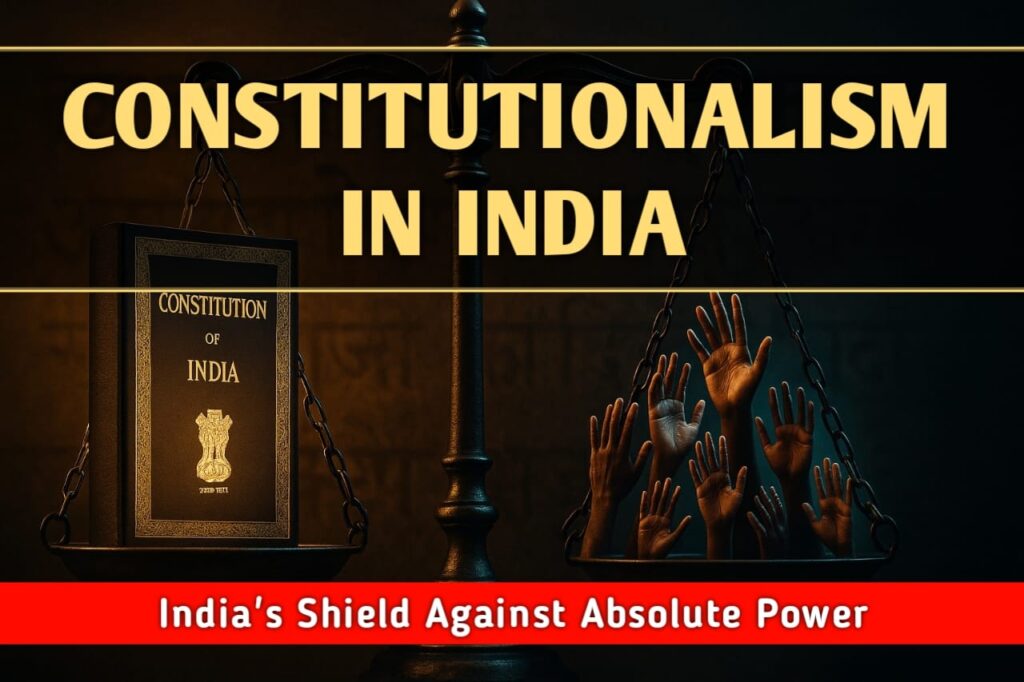
Constitutionalism forms the foundation of any liberal democracy. It really captures the idea of keeping government power in check. The whole point is that state authority cannot just run wild or go unchecked. Instead, it gets shaped and held back by a basic higher law. That law is the Constitution itself. This setup mainly works to shield people’s basic rights and liberties from any overreach by the government. Take the Constitution of India for instance. It came out of a young country’s big dreams right after independence. People see it as a key case of careful planning to build up constitutionalism. The people who wrote it pictured a system of rule where power comes straight from the citizens. That power stays within set boundaries and faces real accountability. Indian Constitution puts limits on state authority. It also protects individual freedoms. All this helps weave constitutionalism deep into how the country operates.
The constitution is the basis of limiting the powers of government. The Indian Constitution sets up a structure for limited government. It does this with some core ideas that spread out power. Those ideas keep it under control. And they make sure it answers to the law.
In India the Constitution is the Supreme law of the land. It does not follow the British way of letting Parliament hold all the power. Here, the Constitution sits as the highest law everywhere. The three main parts of government get their start and their strength from what it says. That includes the Legislature, the Executive, and the Judiciary. Parliament or state assemblies can pass laws. The executive can take actions. But everything has to match what the Constitution requires. If something goes against it, courts call it ultra vires or outside the allowed powers and they can knock it down completely. This setup creates a strict order. The Constitution is supreme law and no branch is above the constitution and thus, it can’t grab total control.
Next comes the separation of powers in how things work. India follows a unique model with some overlap to ensure balance of powers. The legislature handles making laws. The executive puts those laws into action. The judiciary explains the laws and settles fights over them. This split gets support from a web of checks and balances. For example, the legislature passes laws. But the judiciary can look them over and throw out bad ones. The President leads the executive. He also appoints judges of the Supreme Court and the High Courts. Yet a collegium system helps keep the judges of the Supreme Court free from pressure. The Council of Ministers runs the executive side. They are collectively answerable to the legislature. The legislature can call them out with no-confidence votes. This prevents concentration of power. This is a key part of how constitutional rule stays strong.
The whole system rests on the rule of law. Article 14 spells this out clearly. It promises equality before the law for everyone and equal protection under the laws. No person stands above it, no matter their rank or role. Government leaders and workers follow the same rules as regular folks. They can end up in court for what they do. It holds back government reach and keeps people safe from unfair moves.
The Constitution goes further than just limiting government. It offers strong tools that people can actually use. These tools defend personal freedoms in real ways. The biggest ones are the Fundamental Rights in Part III. Courts and experts call them the conscience of the Constitution. They stand as the main defense for personal liberty. Articles 14 to 18 cover the Right to Equality. They ban unfair treatment and end practices like untouchability. Article 19 gives the Right to Freedom that includes speech and expressions, assembly and joining groups, forming associations and union, moving freely throughout the territory of India, to carry on any occupation among other freedoms. Article 21 deals with the Right to Life and Personal Liberty. The Supreme Court has stretched this to cover dignity of an individual, the protection of privacy and included the right to clean environmental also. Article 32, the Right to Constitutional Remedies gives the right to go straight to the Supreme Court to enforce these rights. Dr. B.R. Ambedkar named it the heart and soul of the whole thing. Articles 13, 32, and 226 give power of judicial review to the Supreme Court and High Courts. They can check laws from the legislature and actions from the executive. Article 13 signifies that any law that clashes with Fundamental Rights is void. Courts strike down laws or state moves that cross the lines. Judicial review keeps the rights from turning into empty words. It makes sure constitutional supremacy actually happens in practice.
For judicial review to work well, the judiciary needs independence. The Constitution builds in ways to keep it separate from the other branches. Supreme Court and High Court judges have secure jobs. They can only leave through a tough impeachment. Their pay and conditions stay set. No one can change them to hurt the judges. Legislators cannot debate the judiciary’s behavior. The judges get their authority right from the Constitution. This setup lets them do their work without worry or bias. They become the final watchers over the Constitution and over people’s rights.
The Basic Structure Doctrine: The Ultimate Limitation. India adds something special to ideas of limited government. It comes from constitutionalism here. That is the Basic Structure Doctrine. This idea from the courts sets real borders on changing the Constitution itself. It grew out of fights in court. Parliament wanted more say in the matters to amend the constitution and hence the law of the land. The judiciary worked to guard the Constitution’s main essence.
Things came to a head in the big 1973 decision from Kesavananda Bharati against the State of Kerala. A large bench of thirteen judges in the Supreme Court ruled that Parliament has broad powers to amend under Article 368. Still, those powers have limits. Parliament can change almost any section of the Constitution. It just cannot mess with or wipe out the basic structure or core elements. This idea made it clear that the heart of the Constitution stays protected. That includes things like the Constitution being supreme, along with democracy, secularism, federalism, separation of powers, and judicial review. Later cases built on this even more. In the 1980 Minerva Mills case versus the Union of India, the Supreme Court threw out changes that tried to keep laws from being reviewed by courts. It stressed again that judicial review belongs to the basic structure. The whole doctrine serves as the last barrier against too much law-making power. It makes sure the Constitution’s main ideas cannot get thrown away, no matter how big a majority Parliament has.
Independent bodies play a big role in keeping constitutionalism strong in India. The Constitution creates these groups to spread out power and hold everyone accountable. The Election Commission runs elections that are free and fair, which forms the foundation of democracy. The Comptroller and Auditor General keeps watch over how public money gets spent by auditing government accounts for financial responsibility. The Union Public Service Commission handles hiring for the bureaucracy in a way that is based on merit and free from political interference. These groups work on their own. They provide important oversight for the executive and legislative parts of government. All this helps build a system where power is limited and people have to answer for their actions.
Even with this solid setup, constitutionalism in India faces some real hurdles. Governments have misused emergency rules before, like during the 1975 emergency when things got out of hand. That showed how the system’s own tools could be turned against it. The lesson from that led to stronger protections later on. The 44th Amendment in 1978 put restrictions on the government’s ability to call emergencies. It also made sure fundamental rights, particularly Article 21 on life and personal freedom, could not be paused so easily. Pressures from politics on these institutions keep coming up. Justice moves slowly too, which is another ongoing issue. The courts and everyday citizens need to stay alert all the time to push back against these problems.
Constitutionalism in India feels alive and keeps evolving through a strong and adaptable structure. It goes beyond just ideas on paper. It shows up in daily life, backed by a written Constitution that holds top authority, rights are granted to the people for which they can go to the court, and a clear division of government roles. An independent court system with judicial review powers stands ready. The Basic Structure doctrine offers the ultimate protection. Together, they make sure government power stays in check, limited, and follows the main rules. These tools have shown time and again that they can hold up under pressure. They stop the country from sliding toward total control by a few. In India, rule by laws prevails over rule by individuals. This keeps the true sense of democracy, freedom, and controlled power going strong.

Jyoti Bhojwani is a highly motivated first-year LLB student at Banaras Hindu University with a strong passion for clear and accurate legal communication. Leveraging prior experience in proofreading and content creation, Jyoti is committed to delivering well-researched and accessible legal analysis. She is dedicated to developing expertise in legal writing and contributing valuable content to the legal community.