“quando aliquid prohibetur ex directo, prohibetur et per obliquum” – (what cannot be done directly, cannot be done indirectly)
Table of Contents
ToggleIntroduction
Doctrine of colourable legislation also known as “Fraud on Constitution” is a legal principle which prevent the legislative from enacting a law that is beyond its constitutional power. The black law dictionary defines the word colourable as appearing to be true, intended to deceive, appearance, guise or semblance. which means that government enact legislation under the guise of having authority even though it does not possess any authority to do so. It is the duty of judiciary to prevent the abuse of power.
The two main sovereign authority which is state and centre have their own functions and boundaries for better administration and growth of the nation, The distribution is laid down under Article 246 read with seventh schedule mentioned of our constitution of India which is divided by 3 list union list, state list, and concurrent list to maintain the delicate balance and prevent legislative overreach.
The doctrine of colourable legislation confers the power of the judiciary to check the competency of the legislation in accordance with its jurisdiction. The court have the power to strike them down if there are unconstitutional.
History
This doctrine was adopted by British government from Canada and America. Earlier British function as unitary form of government for their rule but later shifts to the federal mode of government and the powers were distributed between the centre and the provincial unit; this doctrine help to determine the authority of different gov bodies functioning in the country and ensure balance of the power between them.
Government of India act of 1935 section 100 and seventh schedule brings the foundation of Indian Federalism and introduced the concept of distribution of power between federal, provincial, and concurrent list. The establishment of federal court of India to apply these doctrines to resolve dispute between the centre and provinces, cementing the idea of legislative power is true and no one can go beyond it.
This doctrine became a definitive principle of constitutional law with the adoption of the Constitution of India 1950.
Article 246 and Seventh schedule our constitution of India which is divided by 3 list union list, state list, and concurrent list to maintain the delicate balance and prevent legislative overreach.
Why need to study
- Act as the Guardian of the federal structure by protecting the constitutional division of powers
- Ensure neither union nor state legislate overstep their assigned domain.
- Inextricably linked to Doctrine of pith and substance and help to differentiate between legitimate legal encroachment and an illegal covert transgression.
- Helps to understand the distinction between the power of legislature and motive or wisdom of legislature.
Relation With Pith and Substance
Doctrine Of Pith and Substance and colourable legislation are intimately linked, serving two side of the same coin in the judicial scrutiny of legislative competence under Indians federal system, The main function of this doctrine is used to determine the true nature and character of law when its jurisdiction is challenged.
Doctrine Of Pith And Substance is used when law is enacted by union or state legislature seems to overlap or touch upon a subject listed in the other list, the court looks beyond the effect and focuses on the laws domain purpose, whereas Doctrine of colourable legislation is invoked when the court suspects that the legislature, under the guise of legislating on competent subject, is actually and in substance legislating on a prohibited or incompetent subject.
Case law
- R. Balaji v. State of Mysore (1962)
Facts of the Case (Issue): The State of Mysore issued an order classifying all communities other than the Brahmin community into “backward” and “more backward” classes and reserved 68% of the seats in educational institutions and posts in government services for these classes, leaving only 32% for the rest.
Observation & Judgment: The Supreme Court, while recognizing the state’s power to make special provisions for socially and educationally backward classes under Article 15(4) of the Constitution, found the reservation of 68% to be a “colourable exercise of power.”
Court ruled that excessive reservation essentially negated the fundamental right to equality guaranteed under Article 15(1). By reserving such a high percentage, the state was deemed to have exceeded the constitutional limits of its power. The court held that while the reservation should be substantial, it must be reasonable and cannot be used to destroy the overall scheme of equality. The court explicitly stated that 50% should be generally considered the limit for reservation.
- State of Bihar v. Maharajadhiraja Sir Kameshwar Singh (1952)
This case is a landmark judgment as it was one of the first instances where the Supreme Court of India extensively applied and elucidated the Doctrine of Colourable Legislation.
Facts of the Case (The Challenge): After independence, the Bihar government enacted the Bihar Land Reforms Act, 1950 to abolish the zamindari system. The landlords (zamindars) challenged the Act, arguing that the government was not providing adequate compensation, thereby committing a “fraud on the Constitution” by using its power of acquisition (eminent domain) but failing to adhere to the required principles of compensation.
The Argument: The petitioners argued that the legislature was incompetent to pass the law because it offered “less or negligible compensation” compared to the market price. They essentially contended that the legislature was indirectly confiscating property under the guise of paying compensation.
Judgment and Significance: The Supreme Court, while upholding the overall validity of the zamindari abolition laws (partially due to the subsequent First Constitutional Amendment which placed the Act in the Ninth Schedule), specifically invoked the doctrine of colourable legislation to strike down one provision of the Bihar Act. This provision had determined how compensation would be calculated. The Court held that legislating on the matter of compensation while offering a negligible amount was an instance of the legislature attempting to do indirectly what it was forbidden from doing directly, thus making it a colourable exercise of power. The ruling solidified the doctrine as a key tool for the judiciary to curb legislative overreach.
- S. Joshi, Sales Tax Officer, Gujarat v. Ajit Mills Limited (1977)
Fact of the Case (Issue)
The Gujarat Sales Tax Act, 1969, which imposed a tax on sales, was challenged by the respondents (Ajit Mills Limited). The respondents contended that the Act’s levy on certain inter-state sales constituted colourable legislation. Their argument was that the state legislature was effectively encroaching upon a field reserved exclusively for the Parliament—the power to legislate on inter-state trade and commerce (a subject in the Union List).
Judgment
The Supreme Court rejected the respondent’s contention and upheld the validity of the Gujarat Sales Tax Act, 1969.
The Court held that the primary object and true nature of the law (its pith and substance) was to levy a tax on intra-state sales (sales occurring within Gujarat). The levy or impact of the Act on inter-state sales was determined to be merely incidental to the main purpose and substance of the state’s legitimate taxing power.
Limitation
- The Doctrine of colorable legislation is not applicable to subordinate legislation only exclusive on legislative competence.
- The basis of doctrine vanishes where there is no clear constitutional distribution of power.
- Intention or motives of legislature is irrelevant.
- Doctrine of colourable legislation applies only when legislature exceeds its authority as mentioned by the constitution.
Conclusion
Doctrine of colourable legislation helps in preventing the use of the power which is for the unauthorized purpose and to prevent the concentration of power under one government authority. The judiciary applies this doctrine to review such laws passed by the government and strike them down if it finds them outside the jurisdiction.

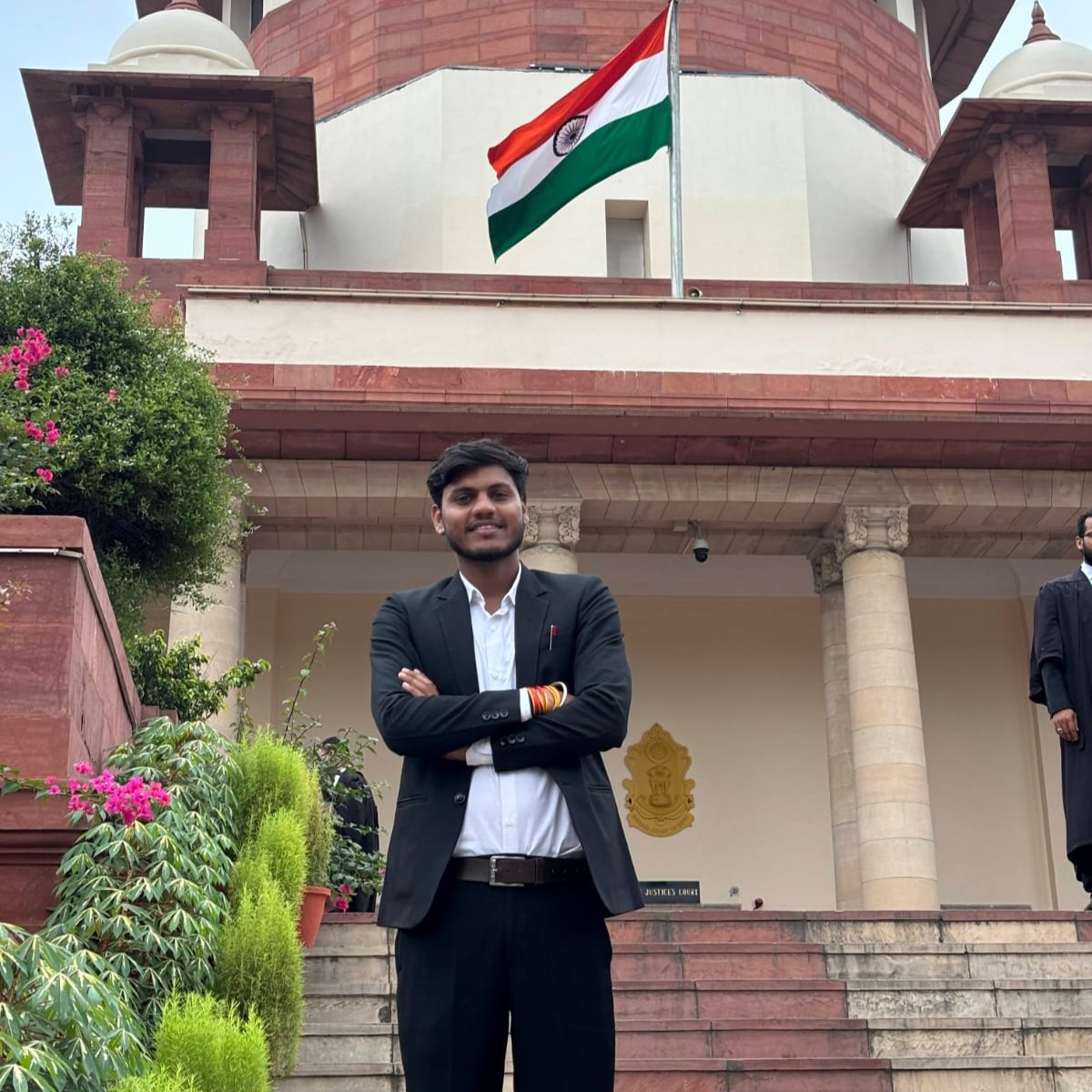
Prashu Singh a final-year BBA LL.B.student at Parul University. My legal interests include criminal law, arbitration, and forensic law. I aim to develop a strong professional foundation through practical experience and meaningful legal work.