This article is written by Anushka Chauhan, a law student at Bharati Vidyapeeth Institute of Management and Research, New Delhi, with a keen interest in Intellectual Property Rights (IPR).
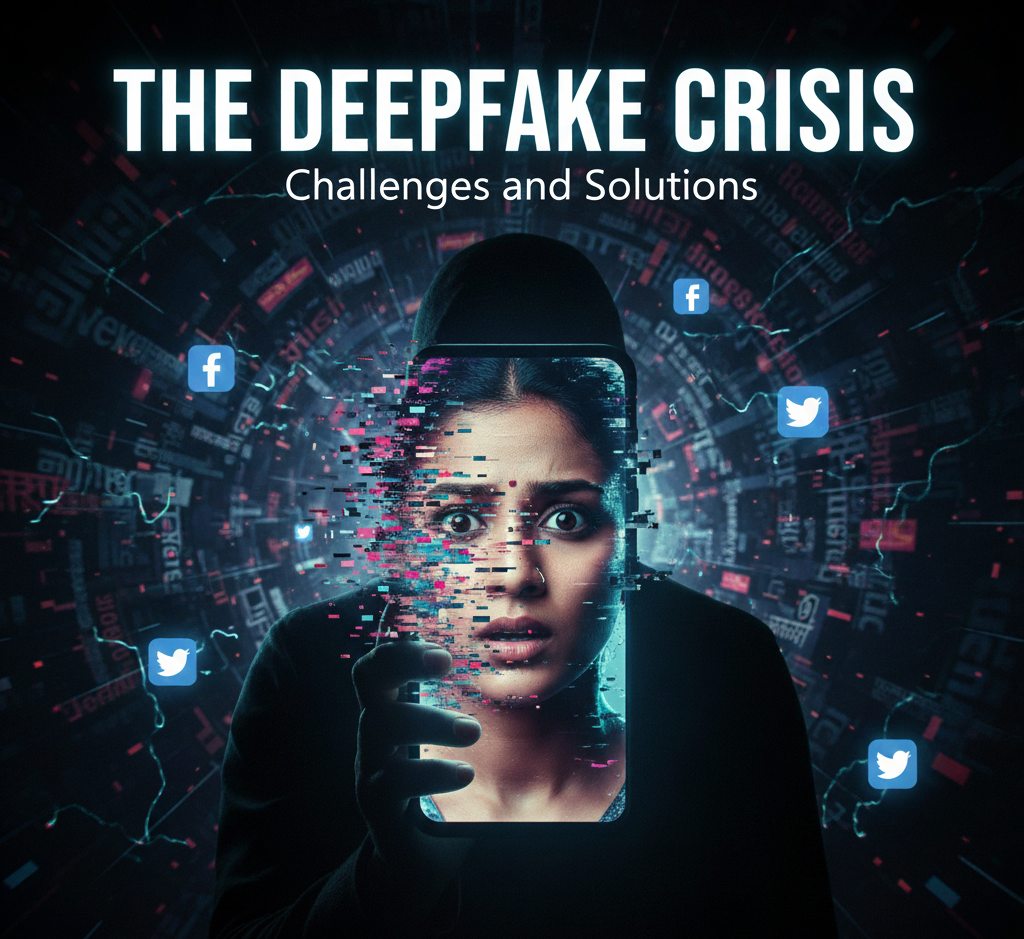
The deepfake, technology and online deception has served a massive threat to the Indian society where the seeing is no longer proves authenticity. Deepfake cases in india have jumped 550% since 2019, with projected losses hitting Rs. 70,000 crore. The RBI reported losses of Rs. 21,367 crore in just the first half of FY 2024-2025, an eightfold increase year on year. A growing share of that fraud involves AI generated fake identities.
The deepfake are images, videos, audio that have been generated or edited using artificial intelligence,AI based tools or audio video editing software. They appear real and are made from the technology. The use of technology had become so prominent that it is difficult to find that whether the image video or audio generated is real or not. The technology in modern world highlights positive and negative impact on people. Therefore, the negative impact serves as the necessity to analyse the law and protect people so that they can be regulated.
The prominent use of the fake have several harmful nation as well as worldwide consequences such as blackmailing, fraud, manipulation, humiliation, spreading and misinformation and sometimes even more than that. The standardisation to protect the people from the misuse of technology as the fake do not have the legal framework to regulate the creation and global dissemination on data.
REPORT ON DEEPFAKE CASES
Karnataka state reports 12 deep fake related cyber crime cases. In the last two years on the use of deep fake videos to miss lead social media users have been on the rise, raising concern. The potential miss use of artificial intelligence as of 2025. The report says that the cyber crime cases over the past five years and Karnataka provided by the Karnataka police.
- 2020 -10,959 cases
- 2021 -8363 cases
- 2022 -12,885 cases
- 2023 -22,224 cases
- 2024 -22,415 cases
- 2025 – as a February 2251 cases
In case of 2024, in Khanapur, Aman was arrested for using the technology to create and share morphed images of a woman.
CHALLENGES WITHIN THE INDIAN LEGAL SYSTEM
At present, the weak legislation for fake or the, inability of the current laws, specifically render AI disinformation unlawful. Delay in the investigation and process that the deepfake must be first authenticated, then action taken lacks the Justice to victim.
However, absence of immediate action when the fake crime was reported serves as a major challenge in protecting people, the technological access over the jurisdictional overlaps and make the process complicated.
However, the law enforcement official and specialisation of people in the forensic regarding the AI on the deepfake is itself, also a challenge
LEGAL FRAMEWORK IN INDIA
There is no such regulatory framework for the identification and the punishment for a deep fake, but attempts have been made as
Information technology act and rules 2021
Section 66C-identity theft using fraud, fraudulent in personification.
- Section 66D- it expressly states that inpersonation with communication device, including fake identity, fraud is a punishable.
- section 66E-tackle, privacy, evolution, particularly or non-conceptual, imitate, deepfake.
- Section 67 – prohibits wrongful dissemination of pornography material including deepfake
IT rules-it provides that the social media platform to remove dangerous deceptive defect material within the notification of official.
Bhartiya Nyaya sanhita,2023
- Section 356-defamation: It States that anyone who makes for publish of treatment in tenting to damage reputation, including online.
- Section 351 and 77: criminal in intimidation and privacy.
Digital personal data protection act 2023
It provides that personal data digitally must be protected by using the KYC biometrics, fingerprint, digital, and electronics signature.
On 10th February, MeitY notify India’s eye T amendment rules. First, first time in the legislation regarding the deep fake, the Indian law and government formally define synthetic media and places clear time bound obligation on platform. It provides the content in the social media regarding the fake must be removed within the 3 hours and nonconsensual intimate content within two hours.
ANALYSIS – CASE LAWS
Titan Industrial Limited v Rajkumar jewelers CS (OS)no.2662/2011
Delhi High Court, in this case, acknowledge the concept of right to publicity stating that an individual has the right to control and commercial use of their own identity. It can be proudly applied to protect against the unauthorized use of voice and identity in the fake.
Neelafilm production Private Limited v Taarak Mehta Kaooltahchashmah.com CS(COMM) 690/2024
The court that the deep fake AI generated content of fictional character can in French the copyright and trademark of character registered to the media house. Therefore, the court granted the ex party and interim injection restrain all unknown parties from infringing Neela film production, copyright and trademark rights.
Over the years, we take down on the behalf of celebrities such as Deepika Padukone, Rashmika Mandana, Aishwarya Rai Bachchan also highlight the judicial recognisation of the urgency of removing generated consent to privacy right and right against defamation.
Puttaswamy V union of India 2017,10 SCC 1
Supreme Court held privacy is a fundamental right and integrity defect, particularly non consensual pornography directly violate, fundamental right.
Kamya Bach V JIXA
The Delhi High Court granted as interim relief to the claimant, whose reputation was, do you deeply and order multiple online platforms to take down the content to protect privacy and identity and protective fundamental right.
EVIDENTIARY PROBLEM OF DEEPFAKE
The Bhartiya sakshya adhiniyam,2023 define electronic evidence under section 61, 62 and 63 as regarding the admissibility of electronic evidence.
The Supreme Court in the case,Arjun Panditrao Khotkar V Kailash Kusharanrao Gorantyal
Certificate under section 63 is mandatory for the admissibility of electronic evidence.
According to these section, it states that if the content was taken by certain device at a certain time and provided it is real, then the procedure requirement under section 63 met and admissible on the law.
SUGGESTION & CONCLUSION
The law regarding the deep fake in India does not express mention the problem related to the deepfake. There should be a proper law dedicated to the serious crime relating to the deepfake defining what deep fake is, punishment, committee responsible for identification of deep fake. The awareness in the public must be there. however, the electronic evidence admissibility is a problem there should not be any kind of tampering with the evidence. There must be the protection of victim and there must be detailed instructions to accused and the online platforms to remove the content.
In the 21st century advancement of technology comes with a great price with great repercussion .The deep fake technology possess a serious threat to Indian law and is criminal in nature. The need for regulatory framework is of utmost urgency to tackle the concern. The implementation and regulation relating to defect technology exist in constitutional gray area but there must be a balance between the need to protect citizens and fundamental right under article 19(1)(a). They must be proper upon by the government and IT ministry.
“The evolving world in a technological advancement, but safe environment reflect the great ability for people to give what they see rather than want to believe.”