Abstract
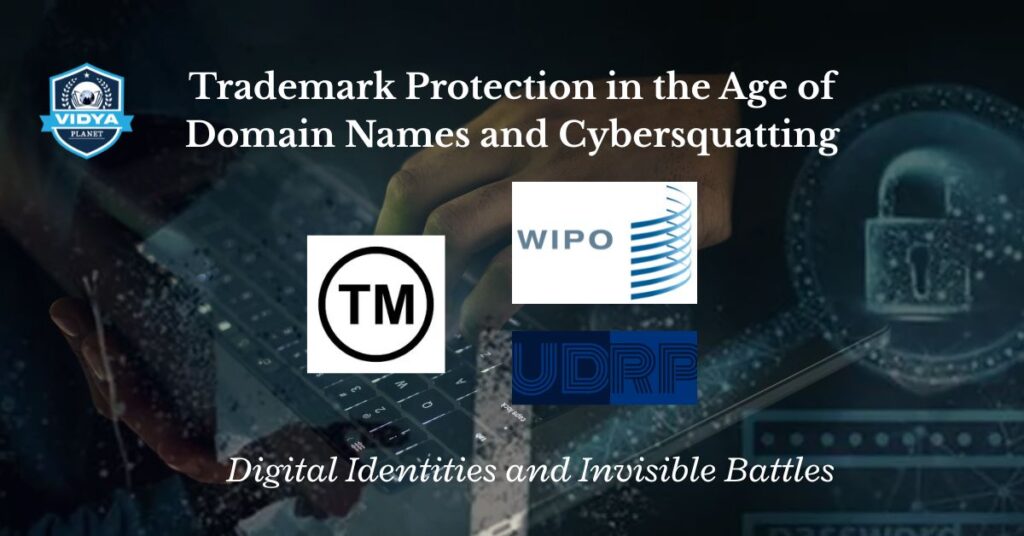
This research paper focuses on the evolving legal connection between domain names, cybersquatting, and trademark law in the digital era. With the rapid growth of internet commerce, domain names have evolved from simple technical addresses to important commercial identities that frequently operate similarly to trademarks. However, this transition has resulted in the emergence of cybersquatting, a practice in which individuals register domain names that are identical or deceptively similar to established trademarks in order to exploit their goodwill.
The paper investigates the legal issues raised by cybersquatting, specifically in terms of jurisdictional complications, enforcement limits, and technological developments. It assesses the effectiveness of existing legislative systems, including the Trade Marks Act of 1999, as well as international procedures like the Uniform Domain Name Dispute Resolution Policy (UDRP).
Furthermore, the study focuses on judicial recognition of domain names as intellectual property assets and examines how courts have reconciled trademark protection with cyberspace reality. The study outlines important weaknesses in the current legal framework and proposes remedies to improve protection against domain name misuse.
Keywords: Domain names, cybersquatting, trademark law, UDRP, and digital identity.
Introduction
The digital revolution has transformed commercial identity, with domain names becoming as crucial assets for businesses that operate online. Unlike traditional trademarks, which are territorially limited, domain names operate in a borderless environment, rendering them susceptible to misuse and exploitation.
The growing practice of cybersquatting poses a substantial threat to trademark owners since it entails the malicious registration of domain names that resemble existing brands. Such actions not only diminish brand value, but also confuse consumers.
The research problem centers on the growing misuse of domain names through cybersquatting and the inadequacy of existing legal frameworks in addressing such disputes effectively. Cybersquatting not only undermines trademark rights but also misleads consumers and disrupts fair market practices.
This study aims to examine the intersection between domain names and trademark law, analyze the legal implications of cybersquatting, and evaluate the effectiveness of current dispute resolution mechanisms.
The research addresses the following questions:
- How are domain names treated under trademark law?
- What legal remedies exist against cybersquatting?
- Are current frameworks sufficient to address modern digital challenges?
The paper is structured to first provide a background and literature review, followed by methodology, statutory analysis, judicial interpretation, findings, and recommendations.
Literature Review
The academic literature demonstrates a shift in the perspective of domain names as useful business identifiers rather than technical instruments. Scholars have claimed that domain names serve similar duties to trademarks in representing the origin and reputation of goods or services.
Legal experts have also stressed the growing importance of cybersquatting as a global concern. While international systems such as the UDRP have expedited dispute settlement, there are still worries about their weak enforcement capabilities.
Indian scholarship emphasizes the judiciary’s proactive role in extending trademark protection to domain names, frequently depending on the law of passing off. However, the lack of express statutory restrictions continues to cause misunderstanding.
Existing studies highlight the role of international mechanisms like the UDRP in resolving domain disputes efficiently. However, critics argue that these mechanisms lack transparency and may not adequately protect all stakeholders.
Despite extensive research, gaps remain in addressing cross-border enforcement, emerging technologies like blockchain domains, and the evolving tactics of cybersquatters.
Research Methodology
Sources include statutes, case law, legal commentaries, and internet databases like SCC internet and Manupatra.
The study takes a qualitative approach, relying on legislative interpretation and judicial analysis to assess the effectiveness of legal frameworks governing domain names and cybersquatting.
Statutory Framework
The legal framework governing domain names and cybersquatting primarily derives from trademark law and international dispute resolution policies.
The Trade Marks Act of 1999, which protects against infringement and passing off, serves as the primary legal framework for domain name regulation in India. Although the Act does not specifically mention domain names, its provisions have been interpreted to include them in the scope of trademark protection.
At the international level, the Uniform Domain Name Dispute Resolution Policy (UDRP) provides a system for resolving domain name registration issues. It allows trademark owners to challenge domain names that are identical or confusingly similar to their trademarks and were registered in bad faith.
The legislative goal behind these frameworks is to protect consumer interests, brand identity, and promote fair competition. However, their application to cyberspace frequently presents questions of jurisdiction and enforcement.
Case Law on Domain Names and Cybersquatting
Judicial rulings have played an important role in defining the legal framework that governs domain names and cybersquatting.
In Yahoo! Inc. v. Akash Arora (1999), the Delhi High Court ruled that domain names are more than just internet addresses and can be used as business identifiers. The court prohibited the defendant from using a deceptively similar domain name, recognizing the idea of passing off in cyberspace.
Similarly, in Rediff Communication Ltd. v. Cyberbooth (2000), the Bombay High Court determined that the domain name “radiff.com” was confusingly similar to “rediff.com,” granted the plaintiff protection. The court noted that even tiny differences in domain names could mislead users.
An important breakthrough occurred in Satyam Infoway Ltd. v. Sifynet Solutions Pvt. Ltd. (2004), when the Supreme Court of India ruled that domain names are entitled to the same level of protection as trademarks. The Court recognized domain names as substantial company assets and applied the principles of passing off to cyberspace.
In Tata Sons Ltd. v. Manu Kosuri (2001), the Delhi High Court defended the well-known “TATA” mark against illegitimate domain registrations, emphasizing the significance of protecting reputable trademarks against dilution.
These examples demonstrate that Indian courts have taken a proactive approach to tackling cybersquatting, seeing domain names as fundamental components of intellectual property.
Analysis & Discussion
The recognition of domain names as trademarks demonstrates the adaptation of legal ideas to technical changes. Courts have frequently highlighted that domain names serve similar duties to trademarks in identifying the source of goods and services.
Cybersquatting weakens this role by abusing well-known brand names for profit. It confuses consumers and hampers fair competition. Judicial responses have generally centered on the notion of passing off, which emphasizes the possibility of confusion and bad faith intent.
Judicial trends indicate a proactive approach in addressing cybersquatting. Courts have applied principles of passing off and trademark infringement to grant relief to aggrieved parties. Comparative analysis reveals that while developed jurisdictions rely heavily on administrative mechanisms like UDRP, countries like India also emphasize judicial remedies.
However, challenges persist:
- Difficulty in identifying anonymous registrants
- Cross-border enforcement issues
- Rapid technological advancements
Legal doctrines such as “initial interest confusion” and “bad faith registration” have been instrumental in adjudicating disputes, but their application varies across jurisdictions.
Despite these advancements, significant difficulties remain. The anonymity of domain registrants makes enforcement difficult, and the internet’s worldwide nature complicates jurisdictional difficulties. Furthermore, the rapid advancement of technology continues to surpass legal frameworks.
In contrast, international procedures such as the UDRP provide faster dispute resolution but lack the enforceability of court decisions. This results in a fragmented system in which remedies differ between jurisdictions.
Findings
According to the study, domain names have been effectively acknowledged as intellectual property assets through judicial interpretation. Courts have played an important role in expanding trademark protection to online, particularly through the use of passing off principles.
However, cybersquatting is a continuing problem due to enforcement difficulties and the lack of explicit regulatory prohibitions. While international frameworks provide effective remedies, they are restricted in scope and lack consistent enforcement.
The findings highlight the need for a more thorough and consistent legal strategy to addressing the difficulties of domain name disputes.
Suggestions or recommendations
- Statutory Recognition: Amend the Trademarks Act to specifically include domain names.
- International Cooperation: Create common global regulations to resolve cross-border issues.
- Technological Measures: Use modern monitoring tools to detect cybersquatting.
- Strengthening Dispute Resolution Mechanisms: Increase the effectiveness and enforcement of UDRP judgments.
- Awareness: Encourage businesses to proactively secure domain names to avoid misuse.
Conclusion
The expanding relevance of domain names in the digital economy has prompted a rethinking of classic trademark rules. While courts have effectively applied these concepts to cybersquatting, the existing legal framework is insufficient to face new difficulties.
The current legal framework, though functional, requires modernization to keep pace with technological advancements and global digitalization. A proactive, harmonized, and technology-driven approach is essential to safeguard trademark rights and ensure fair competition in the digital age.
A forward-thinking strategy that includes legislative reform, judicial innovation, and international collaboration is required to assure successful trademark protection in cyberspace. As digital identities evolve, the law must adapt to protect both corporations and people.